One Morning... Everything Changed.
It started like any other day.
The breakfast was ready. The television was on. Family members were busy with their morning routine.
Then, suddenly...
A spoon slipped from a trembling hand.
One side of the face stopped responding. Words that once came naturally became difficult to speak. Panic filled the room as everyone realized something was terribly wrong.
A stroke had changed life in just a few seconds.
The doctors acted quickly and saved a life. But after returning home, a different battle began.
Walking a few steps felt exhausting. Holding a glass of water became challenging. Climbing stairs seemed impossible. Even smiling with confidence became difficult. Every day felt like starting over.
But recovery didn't begin with a miracle.
It began with one gentle movement.
One guided exercise.
One determined step at a time.
With consistent physiotherapy, proper family support, and the right rehabilitation plan, those impossible moments slowly became milestones. The first step without assistance. The first meal eaten independently. The first confident smile after weeks of uncertainty.
This journey is shared by millions of families around the world.
According to the World Health Organization (WHO), stroke is one of the leading causes of death and long-term disability worldwide. In 2021, there were 11.9 million new stroke cases globally, and 1 in 4 adults is expected to experience a stroke during their lifetime. The encouraging news is that early rehabilitation significantly improves recovery, mobility, and quality of life.
The journey to recovery doesn't always have to happen inside a hospital.
For many survivors, it begins right at home.
Understanding Stroke Rehabilitation at Home
A stroke occurs when the blood supply to the brain is interrupted, damaging brain cells responsible for movement, speech, memory, balance, and coordination.
Although emergency medical treatment is essential, rehabilitation is what helps stroke survivors regain their independence.
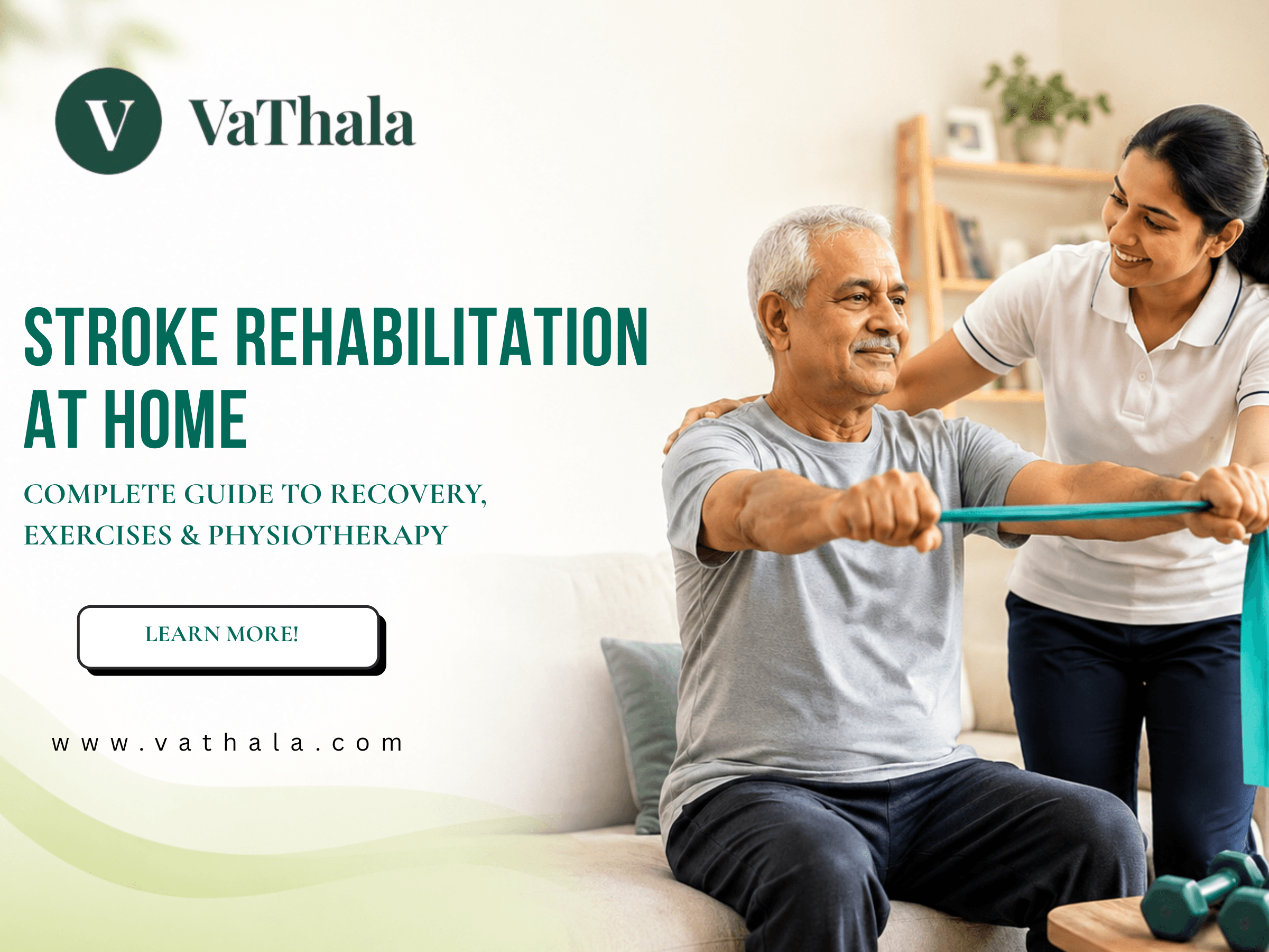
Home stroke rehabilitation involves structured physiotherapy sessions delivered in the patient's own home. Instead of travelling to hospitals multiple times every week, patients receive personalised care in a familiar, stress-free environment.
The brain has an incredible ability called neuroplasticity, allowing healthy brain cells to form new pathways and relearn lost functions. However, this process requires consistent exercise, repetition, and professional guidance.
Research shows that early rehabilitation can improve walking ability, muscle strength, balance, speech, and overall quality of life for stroke survivors.
Benefits of Home Physiotherapy for Stroke Recovery
Home physiotherapy has become one of the most effective rehabilitation options for stroke survivors because treatment is focused on real-life daily activities.
Some of the biggest benefits include:
Personalized Treatment Plans
Every stroke affects people differently. Home physiotherapists assess mobility, muscle strength, balance, and functional ability before creating customized recovery plans.
Faster Functional Recovery
Patients practice movements they actually use every day getting out of bed, walking around the house, climbing stairs, sitting, standing, and improving hand coordination.
Comfortable & Stress-Free Environment
Recovering in familiar surroundings reduces anxiety and helps patients feel more relaxed during therapy sessions.
Better Family Participation
Caregivers learn safe transfer techniques, home exercises, and ways to support recovery between physiotherapy sessions.
Reduced Risk of Falls
Professional balance and gait training help improve stability while reducing the chances of future falls and injuries.
Most importantly, consistent therapy helps patients regain confidence—not just movement.
Essential Stroke Rehabilitation Exercises at Home
Every stroke survivor requires a rehabilitation plan based on their condition. These exercises should always be performed under the guidance of a qualified physiotherapist.
Range of Motion Exercises
Gentle stretching keeps joints flexible and prevents muscle stiffness.
Balance Training
Standing exercises improve posture, coordination, and reduce fall risk.
Walking Practice
Gradually increasing walking distance helps rebuild endurance and strengthens weakened muscles.
Hand & Finger Exercises
Grip-strengthening exercises improve daily activities like eating, writing, dressing, and holding objects.
Strength & Functional Training
Light resistance exercises improve muscle control, while functional training focuses on everyday movements like sitting, standing, and climbing stairs.
Stroke Recovery Tips: Daily Care, Nutrition & Common Mistakes
Stroke recovery requires patience, consistency, and a positive mindset.
Daily Recovery Tips
- Follow physiotherapy sessions consistently.
- Encourage safe movement throughout the day.
- Get adequate sleep and hydration.
- Monitor blood pressure regularly.
- Stay motivated by celebrating small milestones.
Nutrition for Brain Recovery
A balanced diet supports healing and reduces the risk of another stroke.
Include:
- Fresh fruits and vegetables
- Whole grains
- Lean protein
- Healthy fats
- Plenty of water
Limit:
- High-salt foods
- Processed snacks
- Sugary beverages
- Smoking
- Alcohol consumption
Common Mistakes to Avoid
- Skipping rehabilitation sessions
- Remaining inactive for long periods
- Performing exercises incorrectly
- Expecting instant results
- Ignoring follow-up medical advice
Remember, recovery is not measured by speed.
It is measured by consistency.
Every small improvement today creates greater independence tomorrow.
Why Choose VaThala for Home Stroke Rehabilitation?
Recovering from a stroke requires more than just exercises it requires expert guidance, compassion, and continuous support.
At Home Healthcare VaThala, our experienced physiotherapists deliver personalized stroke rehabilitation services directly at your home, making recovery safer, more comfortable, and more effective.
Our home physiotherapy services include:
- Personalized stroke rehabilitation programs
- Certified and experienced physiotherapists
- One-on-one home therapy sessions
- Balance, gait, and mobility training
- Strength and coordination improvement
- Continuous progress monitoring
- Caregiver education and support
Whether your loved one is recovering from a recent stroke or needs long-term rehabilitation, VaThala provides professional care designed to restore independence, improve mobility, and enhance quality of life.
Recovery begins with the right support.
Book a VaThala Home Physiotherapy consultation today and take the first step toward a stronger, more independent tomorrow.