
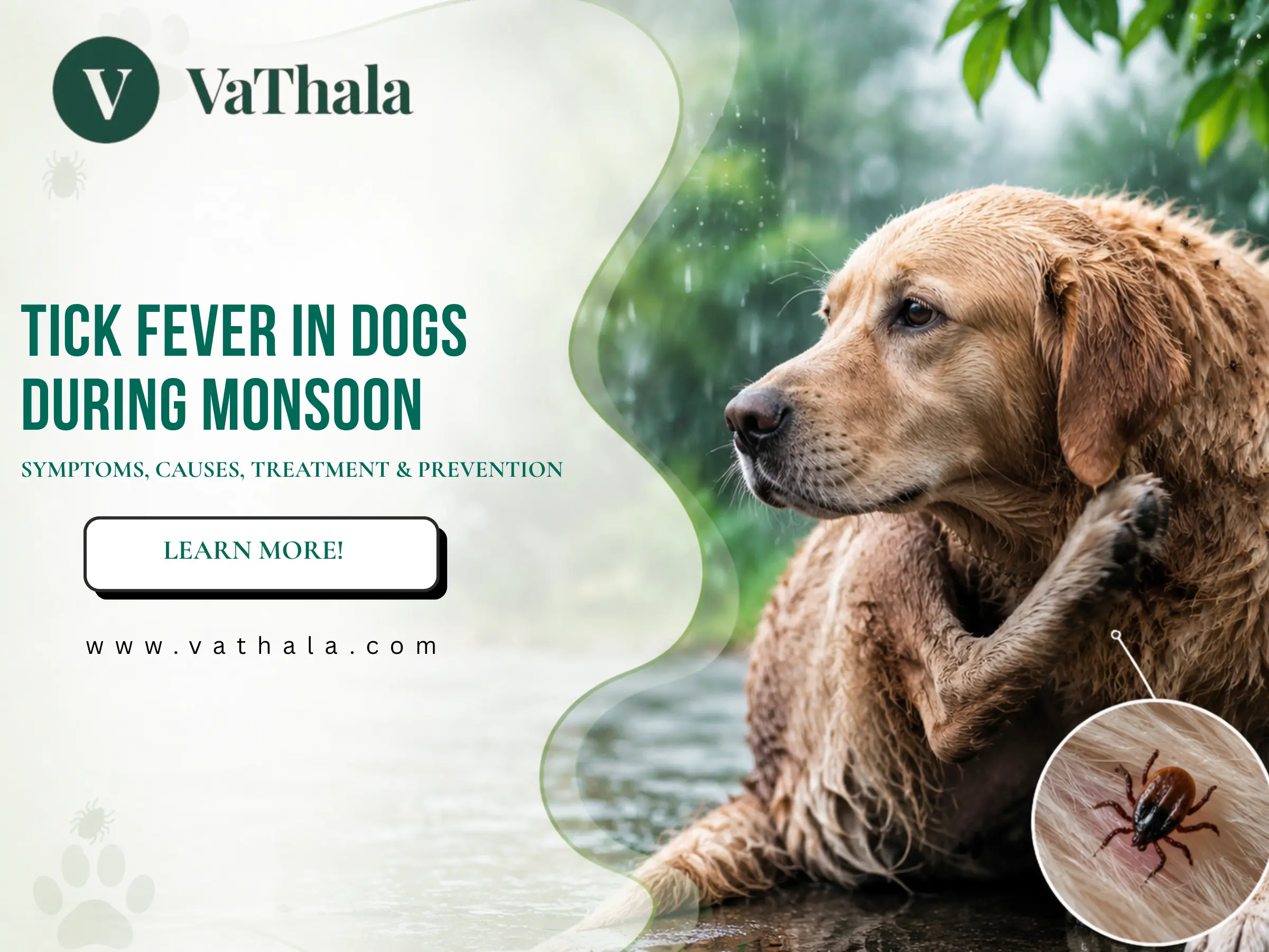
Imagine calling your dog for their favorite treat, and for the first time, they don't come running.
They look at you, but they don't have their usual energy. Their food bowl remains untouched. They seem tired, sleepy, and simply “not okay.”
For a pet parent, even a small change like this can immediately feel worrying.
During the monsoon season, these changes shouldn't always be dismissed as your dog simply feeling lazy because of the weather. Fever, weakness, and loss of appetite can sometimes be early warning signs of tick fever in dogs, especially when your pet has recently been exposed to ticks.
Ticks are more than irritating parasites. Some can transmit infections that affect your dog's health and may become serious without appropriate veterinary attention. Knowing what to look for and when to call a vet can help you act before your dog's condition becomes worse.
What Is Tick Fever in Dogs, and Why Is It Common During the Monsoon?
Tick fever isn't one single disease. The term is commonly used for several tick-borne diseases in dogs, including infections caused by organisms such as Ehrlichia and Babesia.
When an infected tick attaches itself to a dog and feeds, disease-causing organisms can be transmitted to the animal.
Tick-borne infections are an important concern for dogs in India. One molecular study involving 525 dogs from Delhi, Mumbai, Sikkim and Ladakh found that 49.7% were positive for at least one tick-borne pathogen. The researchers detected pathogens including Ehrlichia canis, Hepatozoon canis, Anaplasma platys and Babesia species.
Monsoon weather can make parasite management particularly important. Warm temperatures, moisture, vegetation, and damp surroundings can create favorable environments for ticks.
Pet parents should therefore be more careful about tick prevention and regular coat checks during the rainy season.
What Are the Early Signs and Symptoms of Tick Fever in Dogs?
One challenge with tick fever is that the first symptoms may look like many other illnesses.
Your dog cannot tell you, “I have a fever” or “I feel weak.”
Instead, they communicate through changes in behavior.
Watch for signs such as
- Sudden loss of appetite
- Fever
- Unusual tiredness or weakness
- Pale gums
- Weight loss
- Swollen lymph nodes
- Vomiting
- Changes in urine color
- Unexplained bruising or bleeding
- Difficulty walking or standing
For example, imagine your dog normally finishes dinner within minutes. Over the last two days, they have barely eaten, spend most of the day sleeping and seem weak when getting up.
That's not something to simply blame on rainy weather.
If you've also recently spotted ticks on your dog's body, it's a good reason to consult a veterinarian as soon as possible.
How Is Tick Fever in Dogs Diagnosed and Treated?
Seeing a tick doesn't automatically mean your dog has tick fever. Similarly, not seeing ticks doesn't completely rule out a tick-borne infection.
That's why professional diagnosis is important.
A veterinarian may perform a physical examination and recommend blood tests such as a complete blood count (CBC) along with other tests depending on your dog's symptoms and medical history.
These tests can help identify abnormalities such as changes in blood cells or platelet counts and help the veterinarian determine what further investigation is necessary.
Treatment varies depending on the specific infection and how severely the dog is affected.
A veterinarian may prescribe appropriate medication and supportive care. Dogs with more serious symptoms may require additional treatment or hospital-based care.
Pet parents should avoid giving their dogs human fever medicines or using antibiotics without veterinary advice. Some human medications can be dangerous for dogs, while incorrect treatment may delay proper diagnosis.
How Can You Prevent Tick Fever in Dogs During the Monsoon?
The best approach is to reduce your dog's exposure to ticks and detect them early.
Make a quick tick check part of your dog's daily routine, particularly after outdoor walks.
Pay extra attention to:
- Behind and inside the ears
- Around the neck
- Under the front legs
- Between the toes
- Around the belly
- Near the tail
Keep your dog's bedding clean and dry, maintain hygiene around their sleeping area, and groom them regularly.
If your dog spends time outdoors, inspect their coat after walks, particularly after visiting grassy or heavily vegetated areas.
Your veterinarian can also recommend a suitable tick-prevention program based on your dog's age, weight, breed, and health condition.
And remember: removing ticks is only one part of prevention. If your dog begins showing symptoms after tick exposure, veterinary assessment is still important.
Worried About Tick Fever in Your Dog? Get Vet Care at Home with VaThala
When your dog is already weak or sick, taking them to a veterinary clinic isn't always easy.
Some dogs become anxious during car rides. Senior dogs may struggle with travel. Large dogs can be difficult to transport when they're weak, and waiting in an unfamiliar clinic can add further stress.
This is where Vet Care at Home can make veterinary support more convenient.
With VaThala's Veterinary Doctor Home Visit, a veterinarian can visit your home to assess your dog's condition in a familiar environment.
If your dog has had recent tick exposure and suddenly develops fever, weakness, loss of appetite, pale gums, or unusual behavior, a vet home visit can provide an initial professional assessment and guidance on the next steps. If blood tests, specialized treatment, or hospital care are needed, the veterinarian can advise you accordingly.
Your dog can't explain what's hurting.
But their behavior can tell you something is wrong.
Don't wait until a small warning sign becomes a bigger concern.
If you suspect tick fever in your dog, book VaThala Vet Care at Home and get professional veterinary support right at your doorstep.